About Us


There is a good chance you found us accidentally by using the word “taint” in your search (If you found us on purpose, you deserve our accolades). Of course, we don’t know what you were looking for, but you stumbled on a damn cool project. Look around; let us help send you on a musical journey. Here you will find a number of album reviews from the strange and extreme to the tame and mainstream. Our reviewers are a bunch of obsessive miscreants. Most of us are avid music collectors and have been involved in the music world for decades. A couple of us have been in or are still in bands.

There are no rules on Tickle Your Taint Blog. Our reviewers might make you laugh, or piss you off; both results are legitimate. One reviewer might write a glowing review of an album; another might tear it apart. We may have a new review every week, or we could end up with one every six months. This blog exists as a social experiment to build community among a diverse group of music maniacs – our reviewers and hopefully you.

Contributors include: Alec, Anita Papsmear, AntiChrist-iansen, Billy West, Beert, Cam Starke, Chastity Morgan, Class Warrior, Dale M, Dave, Dismal, El Jefe, Five-Inch Taint, Gory Zaver, Gusty Bellows, Hartman, HinckleyHadAVision, Ian, Infidel Cowboys (Lusk, Wyoming), Jack Rafferty, Jack Stephen, Jimmy “Explosive Diarrhea” B, Jon, Jonnie Dames Rio, Kloghole, Musical Odyssey, Null, PaulySure, Ratones, Scott, So Brick Eh?, SoDak, Spooner D, Taciturn Orator, TheNeonRooster, Travis, Vidal, and Wayne.

Friday, November 24, 2023

Our Five Favorite Studio Records: Bruce Springsteen


By SoDak and Null

When we can muster up the energy, attention, and time to discuss our favorite records by a particular artist, we will post a contribution along these lines. 

Over the decades, we have had numerous conversations focused extensively on Bruce Springsteen, covering our favorite songs and records, as well as our confusion and disappointments. Much of the latter has involved the overproduction on recent records, especially the ones featuring the E Street Band. The space between notes is too often missing. Regardless, plenty of these records have captured our attention and have grown on us. In fact, some of these latter records are the ones that we listen to the most now. 

SoDak: I believe that there are three records by Bruce Springsteen that both of us will list as our favorite records by him. For decades, you and I have consistently held three records in high regard, noting how fucking exceptional they are in regard to the lyrics, the singing, and emotional weight. This much, as far as our favorites, has not changed through the years. In fact, every time Springsteen announces a new record, we are hoping for the fourth record that captures this essence for us. Our favorite three records, except perhaps one of them, are not generally the albums others mention.

Null: That’s right. These three records are Nebraska (1982), The Ghost of Tom Joad (1995), and Devils and Dust (2005). I measure all of his work against these three albums. We both lean toward the “acoustic” Springsteen, which tends to be more working class, political, and darker. However, most of the politics are couched in rich descriptions of the various social relationships of the characters in the songs, which is where his brilliance as a storyteller truly resides. When he’s good, he’s heartbreaking. Each of the albums mentioned above are understated. Not always, but often, when he works with the E Street Band, the outcome is a Phil Spector wall of noise that I refer to as a wall of “meat street and potatoes.” There are exceptions to this, such as Greetings from Asbury Park, N.J. and Letter to You.

SoDak: All of this is exactly right. Springsteen is most powerful when he paints a picture of the life, circumstances, and struggles of people. This may involve how someone lacks choices or options to fix a situation or how people just persist trying to create meaningful lives. The context of these situations is often apparent, such as economic decline or the closing of factories. Each of these three records are largely situated within the general misery created by the workings of capitalism, as people are losing their jobs or farms, leading to desperate attempts to survive. Partly inspired by John Steinbeck’s The Grapes of Wrath, but also by all the accounts of homelessness and migration in the United States and Mexico in the 1990s, Springsteen’s The Ghost of Tom Joad is a remarkable piece of work. His voice captures the weariness and exhaustion of the period, as the callous war on the poor intensified. While there is instrumentation beyond his guitar, the music is sparse, adding gentle textures. The music directs attention to the story. 


Null: The Ghost of Tom Joad is an absolute masterpiece from beginning to end. I think of it as a literary classic. It’s almost like a spoken word record, or should I say “whispered word” record, as one cannot speak openly of the underbelly and failures of the empire. These are the secrets that never find their way onto the national news or into the national narrative. It’s almost an anti-record, in the sense that his vocals are so quite one must almost strain to hear them or have the lyric sheet in hand. Reading the lyric sheet while listening to the album will leave an impression because the songs are so powerful and heartbreaking. One only needs to read along with the lyrics once. You don’t forget these stories as they are silhouetted with corpses and missing loved ones. It is closely related to Nebraska, another masterpiece. Nebraska isn’t so much whispered, as a hushed conversation between 2:00 and 4:00 in the morning, or in the “wee-wee hours.” It’s the sound of being a solitary driver on the freeway in a moonless night. The radio is on low as you pass through desolate industrial wastelands reminiscing on deceased family members, missing brothers, and growing up working class. It was recorded on a 4-track in Springsteen’s bedroom.
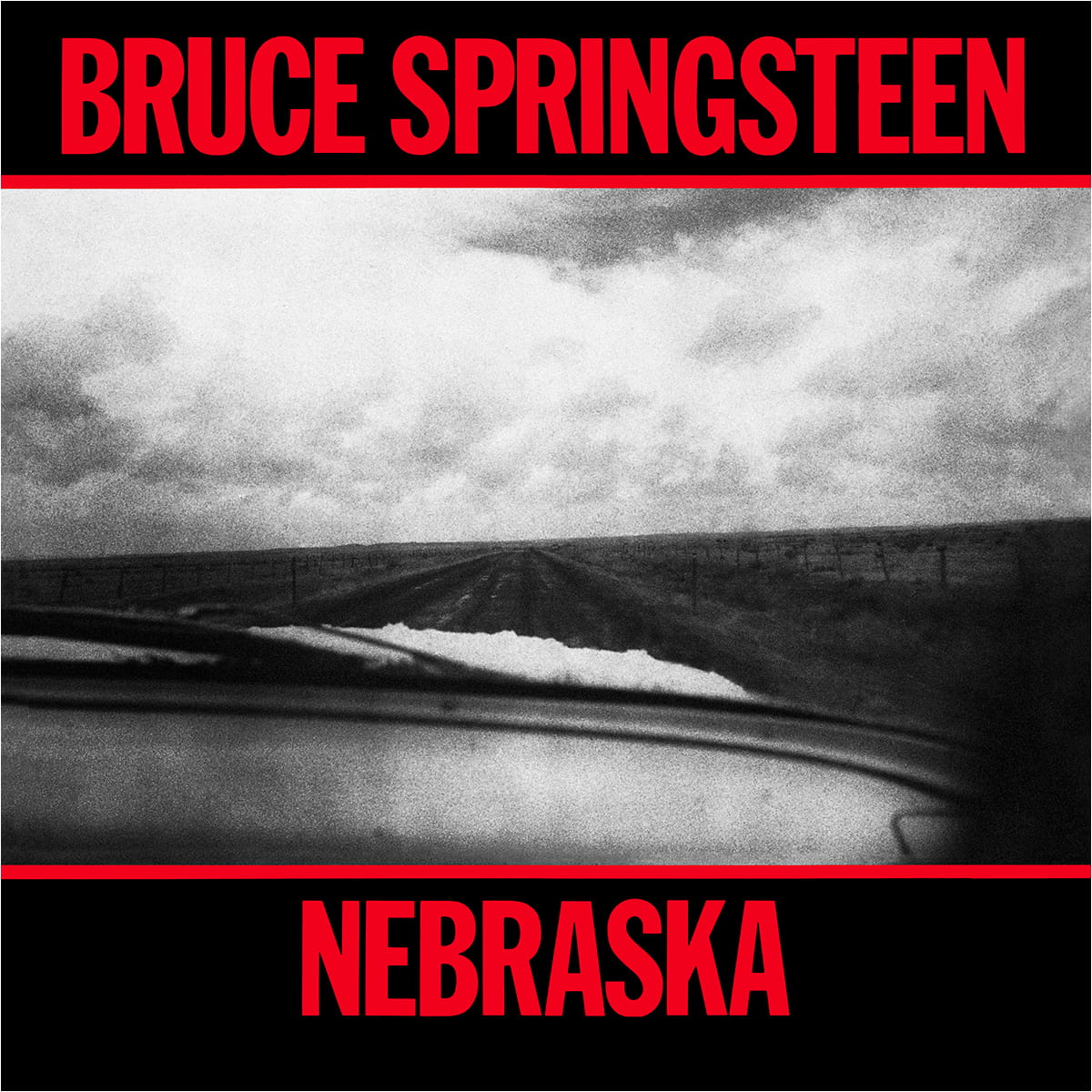

SoDak: Nebraska fucked me up as kid. When I first heard it, I just sat there, staring at the record spin. As strange as it sounds, Springsteen was singing songs that made me think about my extended family, struggling to get by, to hold onto their farms and ranches. The characters in the songs reminded me of people I knew throughout the small city where I was raised. In other words, these songs hit close to home, with some of them set in neighboring states. While it is a somber record, it is captivating from start to finish. “Atlantic City” is an obvious classic with a catchy chorus. But it is a haunting song. His background vocals are foreboding. These tales of loss capture what it is like being ground-down and forgotten about in the American nightmare. Interestingly, for this record, Springsteen was inspired by Howard Zinn’s A People’s History of the United States. 

Null: Fascinating. This influence is apparent in much of his best work. Devils and Dust feels like the third part in a trilogy. If the Ghost of Tom Joad exists in some ethereal, whispered landscape and Nebraska exists in the middle of the night, then Devils and Dust exists the next morning in the shadows of motels and alleyways as the sun is shedding its first rays. It is not a wholly acoustic affair. It feels like an acoustic album but it really isn’t. It follows in the tradition of the other records, but it is a bit brighter. A bit. Its themes are still disappointment and resignation, but there is also a glimmer of hope.


SoDak: That is a good description. A few of the songs were written when he was touring the Ghost of Tom Joad record, so there is a cool connection between these records. In many of the songs, the characters seem exhausted. They have lived in the shit for so long; they are just doing what they can to persist. I suppose it is not surprising that this sentiment seems to hit home in many ways, given the daily grind that we experience. The connections people find with each other provide a sense of relief. On this record, Springsteen really illuminates everyday life, beyond the screens and other distractions. Some songs are still somber, but there is some possibility in the unknown future. 

Null: My fourth favorite record by Springsteen is Darkness on the Edge of Town (1978). It’s just the perfect E Street Band rock record. The band isn’t humongous and overwhelming; it’s all very contained. Darkness is also the fitting companion piece to Nebraska. I’ve always seen these two albums as a pair. Whereas Nebraska exists out on the godless highways, Darkness is walled in. It exists in the dreary confines of working-class towns where the only hope of escape is in the imagination or death. The album is trapped in claustrophobic living rooms (“Adam Raised a Cain”) and exhausted factory floors (“Factory”). The guitars are angry, mean, and, in my opinion, never loud enough in the mix. “Poor man wanna be rich / Rich man wanna be king / And the king ain’t satisfied ‘til he rules everything.” To me, Darkness is the seed of the mythology surrounding Springsteen’s pathos and rock band.


SoDak: I am tempted to name Darkness on the Edge of Town as one of my top five. It is certainly a record that I have had a strong connection to, but the last ten years I have been picking up some of his other records more often. Part of the reason for this is that I want to listen to his records that I do not know as much as those from when we were young. As a result, I have really come to love Western Stars (2019). I have many of the same reservations that you did about this record, which you noted in your review of it. The record is so lush, like a soundtrack, with all the instruments being played on it. Nevertheless, I have fallen in love with the songs and the feel of the record. I think the songs would be even better if some of the instruments were stripped away. Regardless, I find a strange comfort in these songs. Within the songs, Springsteen shares stories of aimlessness and exploration. At times, there is a sense of surrendering and letting go, just to see what will happen. The last record in my top five is Wrecking Ball (2012). I saw him on this tour and was captivated by the performance. The songs on this record sound very big. It opens with an anthemic song, “We Take Care of Our Own,” which is no doubt too optimistic about the humanity to be found within the United States. Plus, the song was readily incorporated into Obama’s campaign drive as part of manipulated emotions alongside empty promises. No surprises here. Regardless, the record is filled with many songs about how greedy fuckers are gutting hometowns and driving down wages. On “We Are Alive,” Springsteen imagines an uprising as radicals from throughout the decades are embodied as a mighty force to overthrow the existing order. Anyhow, Western Stars and Wrecking Ball are now among my favorite five Springsteen records. I was not anticipating this to be the case when we started talking about this project.  


Null: Western Stars and Wrecking Ball are both pretty great albums. The last song on Western Stars, “Moonlight Motel,” crushes me every time I hear it. I’ve never listened to it without crying. Wrecking Ball is also closely related to Darkness, thematically. Except that it has more of a “European folk-feel” with the fiddles and whatnot. It was also great to hear Springsteen return to his working-class storytelling mode.

SoDak: I know that this is part of the reason I continue to listen to Wrecking Ball. 


Null: The last record in my five favorites has to be Letter to You (2020). It was on my Musical Obsessions list for last year on this site. Springsteen recorded the album, with the E Street Band, in just four days. No one had time for three-hour sax solos or bombastic theatrics. The lyrics are a reflection on age and loss. I had been waiting years for a Springsteen record like this one. The great Springsteen “rock records” are Darkness, Letter to You, and the Live 1975-85 (1986) box set. There is a similarity between these records that I can’t quit put my figure on. Maybe it’s just electric guitars and great songs.


SoDak: This is wonderful. Letter to You continues to grow on me. Null, I am curious, are there any Springsteen records that you think are forgettable or that you do not like? I can think of one. 

Null: I can’t stand the second album, The Wild, the Innocent, and the E Street Shuffle (1973), but there are several others that I pay no attention to because they only have a few good songs. I think of these albums as “singles with a few B-sides,” despite that fact that they are full albums. It’s a lie I tell myself.

SoDak: I also find The Wild, the Innocent, and the E Street Shuffle to be unbearable. I am glad that it was not my entry point for Springsteen, otherwise, I might not have wanted to explore other parts of his catalog. For some reason, I also do not find myself listening to Born to Run (1975) very often, despite this being such a huge record for him. At the same time, I love some of the songs on that record, such as “Thunder Road,” “Backstreets,” and “Jungleland.” Guess, I often choose to listen to these songs on some of the collections or live records rather than on Born to Run. 

Null: I agree. I never listen to the Born to Run album.

SoDak: The odd thing about Springsteen is that some of my favorite songs by him are not on my favorite records by him. Is this true for you as well? 

Null: Yes, that is exactly what I mean when I purposefully lie to myself about his discography. Take Magic (2007) for example. When I think of that album, I think of “Nowhere Radio” and “Girls in Their Summer Clothes.” 

SoDak: Right, those are great songs on an okay record. 

Null: To me that record is a seven-inch with an A-side and B-side. I’m sure there are other good tunes on there, but when, Nebraska, Ghost, and Devils are my reference points, Magic is just too much fucking work and too much “meat and potatoes” E Street Band. Oddly enough, the lyrics tend to turn into lumpy gravy in this stew. He just writes better songs when he is more subdued. Not always, but mostly. “Radio Nowhere” is great. He can write some kick ass rock songs, but rarely does he write that many in a row. It’s understandable—who can be reflective and introspective when a E Street cement truck is unloading on your head?

SoDak: Good point. Many of his average to good records have outstanding songs. For instance, The River (1980) is an ambitious record. Perhaps too long. But it includes some unbelievable cuts. Of course, “The River” is a fucking classic—a perfect song as far as I am concerned. It fucks me up each time I listen to it. The song includes everything that makes Springsteen so extraordinary at times. I have also always been head-over-heels for “I’m on Fire” from Born in the U.S.A. (1984), despite the production on the record, which, while poor, still might be part of the charm. Beyond the hits, I really like songs such as “Outlaw Pete” and “The Wrestler” from Working on a Dream (2009) and various cuts on the three forgotten records: Tunnel of Love (1987), Human Touch (1992), and Lucky Town (1992). Plus, he did some great songs on soundtracks, such as “Dead Man Walkin’” and “Lift Me Up.” 

Null: I agree. Those are great tracks. Springsteen has some really moving and excellent songs spread throughout his entire catalogue—the bastard. Many of these hidden gems I have only learned about because of you. I always loved “Lonesome Day” from The Rising (2002) album. “No Surrender” is another song I couldn’t live without. Many great songs can be found on the Live 1975-85 box set—that box set opened me up to some incredible Springsteen songs. I bought that box set when it came out in 1986. The only other Springsteen record I had at the time was his first, Greetings from Asbury Park (1973), which is a dark and muddy affair. I have a soft spot for that record. Yeah, Springsteen has a ton of great songs buried in box sets and middle-of-the-road records. It’s a pain in the ass. I sort of fell in love with Working on a Dream once I figured out it was his “Smoky Robinson” record, which made me hear it differently, but it isn’t good enough to be in my five favorites. Also, that four CD Tracks (1998) box set was about 60 percent killer. 

SoDak: Tracks is an incredible collection, filled with previously unreleased gems. 

Null: Yeah. As far as my five favorite Springsteen records, I will hold to them being Nebraska, The Ghost of Tom Joad, Devils and Dust, Darkness on the Edge of Town, and Letter to You, in no particular order, with a suggested supplement of Live 1975-85 and a shit-ton of random tracks spread like debris over a minefield. There a quite of few meandering and unfocused albums of his out there that I do not spend much time with.

SoDak: My favorite five are also in no particular order, but currently are: Devils and Dust, The Ghost of Tom Joad, Nebraska, Western Stars, and Wrecking Ball. We’ll see what happens when he releases more records. 

Null: Maybe, we will get the next record that we have been wanting.

SoDak: The potential stories to tell are bountiful. 

Null: We definitely need to hear these stories. 


Wednesday, November 22, 2023

Samiam, Stowaway (Pure Noise, 2023)


By Null

I was never a fan of Samiam in the past, primarily because I was never really exposed to them. They simply fell under my radar. Years ago, SoDak, used to send me compilations that he put together. One of those CDs contained the Samiam song “Sunshine,” which is a perfect punk rock song. The lyrics were great and the music made me want to pogo out the fucking window. Around this time, I learned that several people I know loved Samiam. I picked up the album Astray, which opened with the track “Sunshine” and thought it was quite good, but it did not leave a lasting impression on me.

Over the next several years, I happened to see Samiam in concert many times with very enthusiastic friends. I thought they were a great live band and even enjoyed spending time talking with some band members after the shows. Over the years, I picked up a few more of their albums and enjoyed listening to them from time to time.

This year, Samiam released a new album Stowaway and everything changed for me. The record is an absolute barnburner. It has a wonderful emotional intensity, constant propulsion, and endless hooks. The lyrics hit me in the chest. The band still has their fairly subjective lyrical content, but something seemed different. It articulates many of my feeling about getting older, coming to terms with loss, and even the ever-present awareness of a changing global climate and the forthcoming shitstorm. 

The song, “Monterey Canyon” with its repeated refrain, “I leave my body there for you / No longer resisting the tide / And as I float away, I wonder why / I’m not afraid to say goodbye,” made me want to openly weep while at the same time jumping around my living room rockin’ the fuck out. I read in the album credits that a few members of the band had lost their fathers. This made me wonder if “Monterey Canyon” is about a father finally giving up his battle to live and finally letting go, or if it is the son that finally embraces his loving detachment to a cruel world and lets his father go. Either way, the same lesson is learned. One must just try to enjoy each day. Life is for the living, who one day will have to also let go. It seems that as I age, I experience the things I love slowly drifting away from me. It is the way of the world, and it is somehow condensed into these two minutes and forty-three seconds. This song is filled with exuberance and life, while the lyrics are a mediation on losing it. Brilliant.


The whole album seems to convey this feeling—from beginning to end.

Likewise, “Natural Disasters” places one’s daily life and circumstances in the midst of global climate change. The song’s chorus is about being stranded with the narrator, simple enough, but the verses describe the harrowing environmental reason it occurred: “It’s too late to leave now / We’ve waited too long / Firestorms and atmospheric rivers / Flood waters carry sewage and debris / A garbage dump right outside your doorstep / Have left you stranded here with me.” I have never experienced Samiam as an overtly political band, which is why it is so powerful when they articulate so well the cries have been ignored for decades, which are those of the poor, working-class, and average folks who will carry the burden, and the death toll, of global climate change.

It is great to hear a band like Samiam, who have been making records since 1990, release an album that feels so urgent, fresh, and timely. Do not underestimate these old guys. They bring a lot to the table, both musically and lyrically. They are singing the present.

Given how great Stowaway is, I started to wonder: Were Samiam always this good? Over that last several weeks, I have fallen in love with the albums Trips and Whatever’s Got You Down. At some point I will go back and revisit the albums I bought years ago. I have a feeling I may hear them differently now.


Monday, July 31, 2023

Revisiting the 80s

 By Jimmy “Explosive Diarrhea B”

Mrs. "Diarrhea B" was recently invited to a 1980s themed party. As someone who came of age in the 80s, I get annoyed by this kind of thing. Sure, the 80s were ridiculous with the big hair, shoulder pads, and music loaded to the brim with misogyny and cheese. This is the shit that people associate with the 80s, as if it was simply a lot of nothingness. It is important to note that there was a lot more. We went through every day wondering if this was the day that our senile president was going to push the button and erase humanity from the face of the planet. There was an increased push to deregulate; labor union power, which had been decreasing for decades, declined even further; the globalization of the economy reached new levels; and the change from high-paying manufacturing jobs to the service industry resulted in the further marginalization of the working class, and this trend began touching almost everyone by the end of the 80s. Oh, and let’s not forget about the death sentence known as AIDS. My friends and I drank to excess to deal with the shit of our quickly changing everyday lives. We needed rock and roll music, which the bands of the time attempted to give us. Ultimately, many of them sold their figurative souls to record power ballads, more on that below.

Nearly everyone, including people who lived through the decade of Reagan, like to make fun of 80s pseudo-metal. We call it butt-rock, butt-rawk, hair metal, glam metal, etc. All of these names are used for the same thing, and they have one common goal—to delegitimize the music of an era. I fully agree that much of it was garbage. But some of the bands that fall under this label were able to put out some good music before the major label record companies began molding the bands and their sound to make them all look and sound the same way. Below I submit a series of videos from YouTube to demonstrate my point. You may not like the music, but my hope is that you will recognize that many bands did not necessarily choose the path they took. The cheese-ball music we call hair metal is an invention of record label executives.

Ratt, "You Think You're Tough."


Great White, “Street Killer.”


220 Volt, “Firefall.”


Y&T, “Mean Streak.”


Mötley Crüe, “Too Fast for Love.”


Twisted Sister, “Under the Blade.”


Night Ranger, “Don’t Tell Me You Love Me.”


I completely understand why people make fun of things they think are ridiculous. When it comes to music, I struggle not to completely dismiss and giggle at hip hop, popular country music, rap, and recent pop. When I allow myself to have an open mind, I occasionally find something I appreciate. I urge you not to completely dismiss the 80s. The next time you tease your hair and don a denim shirt with shoulder pads on a party night, keep in mind that you are not representing the entirety of 80s culture or history.


Friday, July 28, 2023

The Death of Sinead O’Connor


By Null and SoDak

Not to be too dark, but we wondered how long Sinead O’Connor would be around following her seventeen-year-old son’s suicide in 2022. She was always quite open regarding her own health struggles. She battled deep and dark demons in front of the whole world, which was sad and tragic. This week, when the news of her death was shared, we welled up and shed some tears. 

The Lion and the Cobra (1987) was released when we were in high school. With every listen, chills would run up and down our bodies. Sinead had such a powerful and beautiful voice. She demanded attention. The full range of emotions were present on her albums. She was punk rock. Sinead had truckloads of courage in the face of lesser and more powerful entities. Famously, on Saturday Night Live, she torn up a picture of the pope in protest of the child abuse perpetuated and covered up by the Catholic Church. Her actions caused an uproar, as this issue was not being discussed in the news or by the public at the time. Shortly after this event, she attended a tribute concert to celebrate Bob Dylan. Upon being introduced, the weak-kneed reactionaries in the audience proceeded to boo her. Sinead stood there staring at the audience. Kris Kristofferson walked on stage telling her, “Don’t let the bastards get you down.” Rather than singing the planned Dylan song, Sinead had the volume turned up on the microphone, and she sang an a cappella version of Bob Marley’s “War.” She was defiant in the best possible way. Sinead was a comrade in arms. 

While we did not follow her entire career, both of us have many of her albums. These records are beautifully inspiring and absolutely heartbreaking—in particular, The Lion and the Cobra, I Do Not Want What I Haven’t Got (1990), and Faith and Courage (2000). She recorded so many songs that bring tears to our eyes—“Jackie,” “Troy,” “The Last Day of Our Acquaintance,” and “Nothing Compares 2 U.” The list goes on and on. Her version of “Rebel Song” is incredibly moving. In “Black Boys on Mopeds,” she exposes the racism and hypocrisy of Margaret Thatcher and the British government. She sings:

England’s not the mythical land of Madame George and roses

It’s the home of police who kill black boys on mopeds

And I love my boy and that’s why I'm leaving

I don’t want him to be aware that there’s

Any such thing as grieving

Young mother down at Smithfield

Five a.m., looking for food for her kids

In her arms she holds three cold babies

And the first word that they learned was please. 

Sinead was a fucking warrior. She was tough as leather and tender as a flower. Sometimes the cruel world eats you up. In 1994, Sinead wrote a simple, direct song, called “Thank You for Hearing Me,” extending love and appreciation. We still need artists, human beings, like Sinead to stand in defiance against the bullies and fascists. At this point, we simply say thanks. 


Wednesday, June 21, 2023

Willi Carlisle, “Tulsa’s Last Magician”—A Tale of Three “Willis”


By Jonnie Dames Rio and SoDak


What does it mean to tell a story? To entertain? Especially in a world in which craftsmanship is disappearing? This is the position of a self-described “cowboy in drag,” a cobbler, a mechanic, a potter, a painter, just about anyone, living in an age where they are not appreciated. Here stands Willi Carlisle, a sincere musician, a traveling poet, a romantic with a radical acceptance of other human beings for who they are. With guitar held high, almost as if it is part of his voice, he tours the country to share songs about those who are lost, who are struggling, who strive to foster love in a cold world where crude economic logic dominates and determines worth. Willi cuts through the bullshit, presenting what is real, what is immediately before us, and what we often ignore or miss. In doing so, he carries on a tradition of thought and sentiment passed down through other significant “Willis”—such as William Faulkner and William Morris. Carlisle’s song, “Tulsa’s Last Magician,” is a reminder that the past, which, as Faulkner observed, is never dead, and, as Morris noted, is a reminder of elements of humanity that have been lost over time, serves as an inspiration for what we can become again.

“Tulsa’s Last Magician” presents the disenchantment of the world where “making numbers that sing” is valued at the expense of skill and guile. When hearing Willi contrast the experience of the magician performing in Tampa, blowing everybody’s mind, to working with computers and impressing his boss with numbers, he evokes something that we all experience, whether we realize it or not. Who among us has taken the time, dedicated ourselves to learning the art of labor, only to be met with lack of interest and appreciation? Yet, when we go to our jobs, satisfy arbitrary quotas through a process we have no real control over, we are celebrated. This is the inverted world of capitalism, where our dehumanization is the source of profit. Our world is seemingly one where craftsmanship, our creative endeavors that enrich our lives, does not count for much anymore. However, as Willi sings, that does not mean what you do isn’t meaningful: 

So friend if you’re the kind that thinks
No one quite gets quite what you are
Like you’re cobbler or mechanic in this age of flying cars
If you think that you see right behind what’s right before our eyes
You might be a small town’s last magician in disguise.

Willi’s sense of class and class consciousness is greatly illuminating, as he depicts the challenges of the young magician struggling to scratch together resources to learn card tricks. As an adult, the magician moved from city to city, performing for drunks and tourists. His skills, knowledge, and craft were treasures that held meaning, expanded his capacity, and generated awe. Nevertheless, these pursuits were often seen as quaint in the modern world. They ended up being the mere means of survival, as the magician struggled to make do on tips, gifts, and the generosity of strangers. One person after another demanded explanations ignoring the magician’s abilities. Willi remarkably captures the power and beauty of a craft, while at the same time revealing the hardship and disappointment where such skills are readily deemed relics of another age. The constant tensions of this life are depicted in the following lines: “he’d practice all his worst mistakes in a dirty bathroom mirror. And when his mother drank, he learned to disappear”; “but he had this grand finale they refused to understand, it’s hard to tell the whole truth of a family sawed in half, and that’s why Tulsa’s last magician left his home so fast”; “turnin’ tricks on Los Sueñeros out in the Californ-i-ay, they pushed him up against a wall, said buddy get a grip, so he learned to set himself on fire on the Las Vegas strip.” 

Although perhaps not intentional, to us, Willi presents an understanding of the world similar to another “Willi” from more than 100 years ago—William Morris. As a political radical with Romantic sensibilities, Morris brought a revolutionary and historical approach to art and labor. Similar to Willi Carlisle, Morris observed, in his lecture “Arts and Its Producers,” a related dynamic of alienation, calling out the changes of our world today, whereby “life is divorced from the subject-matter of his labor…. Work has become ‘employment,’ that is, merely the opportunity of earning a livelihood at the will of someone else. Whatever interest still clings to the production of wares under this system has wholly left the ordinary workman, and attaches only to the organizers of his labor; and that interest commonly has little to do with the production of wares, as things to be handled, looked at…used in short, but simply as counters in the great game of the world market.” Here, there is an insightful recognition of something being lost, when craftsmanship becomes alienated in the wage-labor system of capitalism and our work no longer serves as the basis that determines our needs and the means for fulfillment. This same lament is present all throughout “Tulsa’s Last Magician.” 

And the crowd all thought him funny, and good at sleight of hand
But he had this grand finale they refused to understand
They demanded explanation when the card pulled was their own
And that’s why Tulsa’s last magician lost his faith and headed home.

In time, the magician gave up the performance, and applied his skills to computers and investments. All the “rabbits that were livin’ in his hat” became “free-range,” while he worked his magic making “the numbers sing” as decades of his life disappeared yelling at the news and punching a time clock. 

William Faulkner’s sentiment that “the past is never dead, it’s not even past” runs throughout Carlisle’s song. It is fascinating how these three Willis are entangled. For Morris, workers, craftspeople, were “continuers of history.” The “lost” arts and knowledge of artisans should not become some bygone relic, a reminder of a way of life that is no longer lived. Morris insisted that “what romance means is the capacity for a true conception of history, a power of making the past part of the present.” All of the Willis are romantics, striving to create meaning and connection in an inverted world. These dying arts demonstrate the qualities of humans beyond producing economic value. They are inspirations as to what we can be, a hope for the future. In a lecture, delivered in 1882, Morris invoked a sentiment captured by Carlisle, “If we have no hope for the future, I do not see how we can look back on the past with pleasure. If we are to be less than men in time to come, let us forget that we have ever been men.” 

Willi Carlisle presents a fantastical story, focused on a magician who seems out of step, yet we quickly realize that we are also trapped in this situation, where the years are flying by working dehumanizing jobs, wishing we had time for our passions. The parallels between a magician and traveling musician are also evident. Willi captures our attention, presenting powerful stories that connect us to each other. He is a revolutionary, sharing potent songs that hold up a mirror to the world. Let us never forget that we have ever been human. 

“Tulsa’s Last Magician” appears on Willi’s second record Peculiar, Missouri (2022).


Wednesday, June 14, 2023

A Spot in Time: Jimmy "Explosive Diarrhea B." reflects on the passing of Glen Lockett on March 4th, 2023


I considered calling this tribute “A Spot in Time” or “Spot on the Spot.” Obviously, the former won the contest. Either would have worked because Spot, also known as Glenn Michael Lockett, became part of underground music history at a specific point in time and he was the right person at the right place. If you bought punk, metal, or other underground records in the 80s, there is a good chance you know the work of the man known as Spot. The first time I came across the name was when I purchased Saint Vitus records in the 80s. Later on, I purchased other records produced by Spot such as Up On the Sun and Meat Puppets II by the Meat Puppets, Husker Du’s Zen Arcade, and Saccharine Trusts Paganicons. To many the name Spot is as much a part of SST Records as Raymond Pettibone and Gregg Ginn.

 It is true that many of the early SST releases had lackluster production. It is hard to blame Spot for this. I recently read Jim Ruland’s book, “Corporate Rock Sucks,” about SST records. Ruland relates that a producer was asked to produce a record for one of the bands (I cannot recall which band). Greg Ginn offered him $4500 to make it happen. The exasperated producer asked if this was for a single song. Ginn’s response was that the cash was for the entire album since that is how SST did things. Spot was dealing with one of two things or perhaps a mixture of them, a label with limited resources, or a label owner unwilling to spend money. This forced the producer and the bands to record at the cheapest time possible, the graveyard shift. The albums were recorded in just a couple of nights. Considering the budget and the marathon recording sessions, it is astounding that the albums didn't sound much much worse; some, like the Meat puppets, Up on the Sun, sound pretty good.

Spot’s production was raw, and with minimal sound effects, loops, and other foreign noises. Spot worked with the bands in a collaborative way and captured their live sound. If the band had warts, those warts are on the records.

The production of 80s punk rock and metal records, and the willingness of small labels to let the bands be themselves made those bands sound unique. I adore the sound of the early Saint Vitus records. I believe that having the vocals prominent in the mix and the muddy melding of the bass and guitar created a doom sound that hasn't been reproduced by any other band. When Dave Chandler would break free of the groove and solo, it was jarring and very evil sounding – it was quite awesome. I believe that Saint Vitus themselves, on later records, were not able to capture the haunting doom sound of the Spot produced records. 

Spot tickled my pristine teenage taint, and some of his work continues to tickle my nasty and abused middle-age taint.